
9 April 2026
Gambling
According to a recent research from Bank of America (BOA), sports event contracts that are listed on prediction markets like Kalshi and Polymarket might someday generate $1.1 trillion in yearly volume.
Compared to the projected $100 billion in event contract turnover that markets anticipate this year, that would represent an eleven-fold increase.
Based on 1% charges, BOA forecasts that prediction market operators may make $10 billion annually if sports derivatives volumes reach $1.1 trillion.
The revelation comes at a time when yes/no exchanges are trying to expand outside of sports, but as BOA notes, around 80% of Kalshi's volume in March came from contracts for sporting events.
With futures linked to cryptocurrencies accounting for two-thirds of the exchange's non-sports turnover, the bank recognizes that there is life on Kalshi outside of sports. Additionally, there is proof that mention markets and event contracts on politics and culture are becoming more popular among traders.
DraftKings (NASDAQ: DKNG) and Flutter Entertainment's (NYSE: FLUT) FanDuel form a duopoly in the US sports betting market.
Kalshi is leading the way in terms of market share in the prediction markets industry. According to BOA, the exchange accounts for 90% of event contract activity in the US, with Crypto.com being its closest rival at 4%.
"Kalshi is becoming rapidly integrated into daily life with always on odds for markets across finance, crypto, pop culture, and sports,” note BOA analysts Julie Hoover and Shaun Kelley.
A portion of Kalshi's supremacy can be attributed to Polymarket's lack of presence in this nation.
It is conceivable that Kalshi and its rivals will be able to reach $1.1 trillion in annual sports event contract volume because data indicates that astute sports bettors are switching from traditional sportsbooks to prediction markets where they are not restricted or prohibited from winning excessively.
Additionally, by lowering or doing away with fees in return for the liquidity that these bettors supply, platforms like Kalshi encourage sports betting "whales."
“Sharp bettors are typically banned or limited on regulated sportsbooks for beating the house too frequently,” add the BOA analysts. “For these bettors, who often wager/trade much more than a casual customer, a prediction market could be much more attractive since they don’t get limited and can play the sportsbook house and market make against casual bettors.”
The sports betting equities complex has seen a sell-off due to concerns that prediction markets would invade areas that were previously under the jurisdiction of gaming corporations. Despite below-average trading in both stocks, the Bank of America report caused shares of DraftKings and Flutter to decline by 7.06% and 3.89%, respectively, today.
Over the past year, shares of Flutter and DraftKings have decreased by 55.5% and 38%, respectively, with some of those losses being attributed to the growth of prediction markets. BOA affirms that the emerging sector has advantages, despite some research indicating that prediction markets haven't substantially reduced sportsbooks' market share.
These include a younger clientele, a lack of clarity regarding taxation, which means businesses like Kalshi aren't subject to the same state-level tax treatment as sportsbooks, and a federal regulation that permits (for the time being) yes/no exchanges to offer sports contracts in some states where sports betting is illegal.
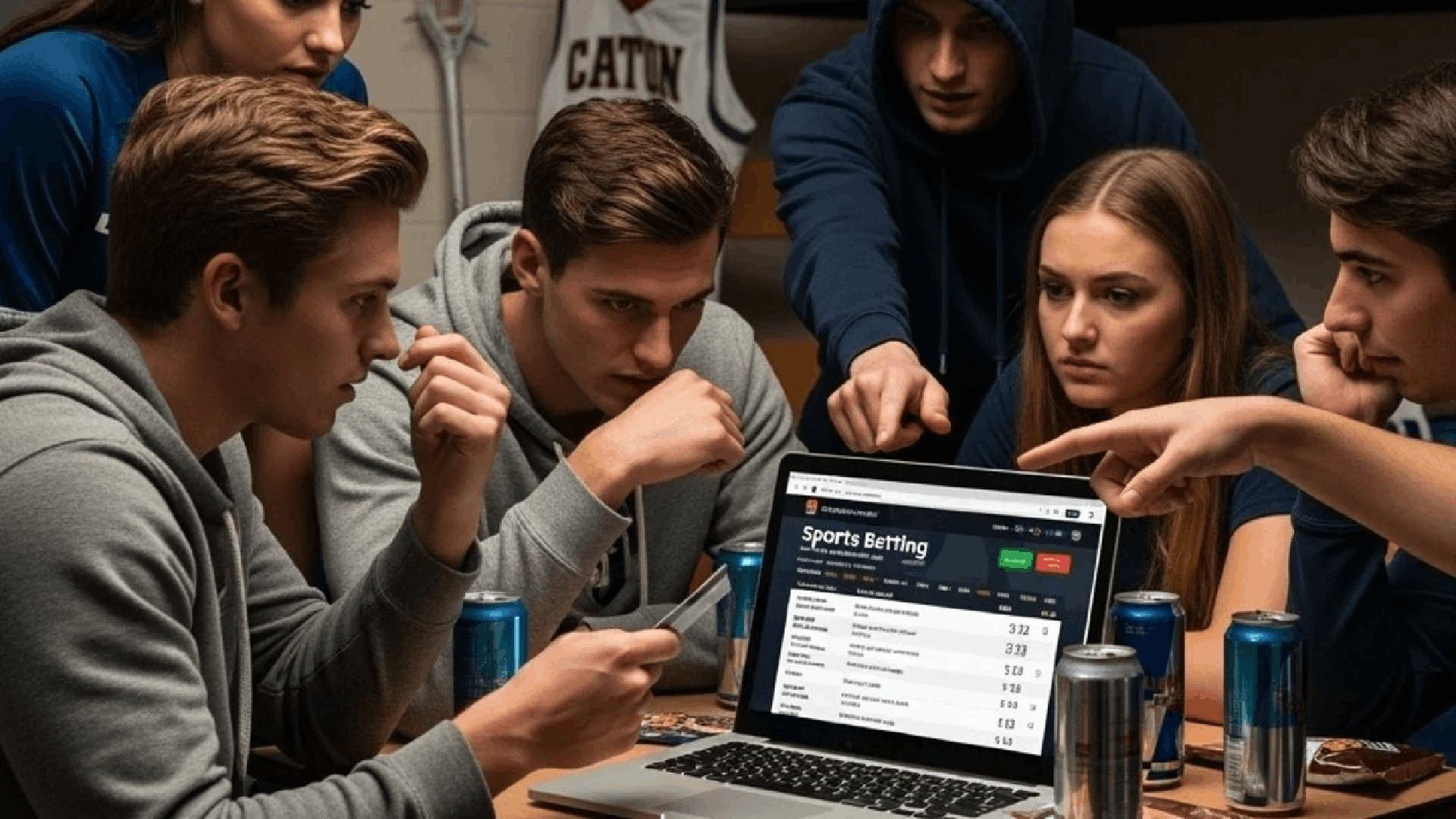
Proposals to permit Division I, II, and III student-athletes to wager on professional sports are likely to be approved by the NCAA. In May, Todd Shrib .. Read more

The Cherokee Nation of Oklahoma, through its business subsidiaries Cherokee Nation Businesses (CNB) and Cherokee Nation Entertainment, LLC, has reques .. Read more

EDGE Markets has announced that it completed a $17.2 million seed financing round at the end of last year, enabling the growth of its EDGE Boost platf .. Read more
© TheRealGamble, 2026. All rights reserved